



Why AI agents are becoming essential to modern SOC operations
 Expert of the InfoSec division
 2026.11.19
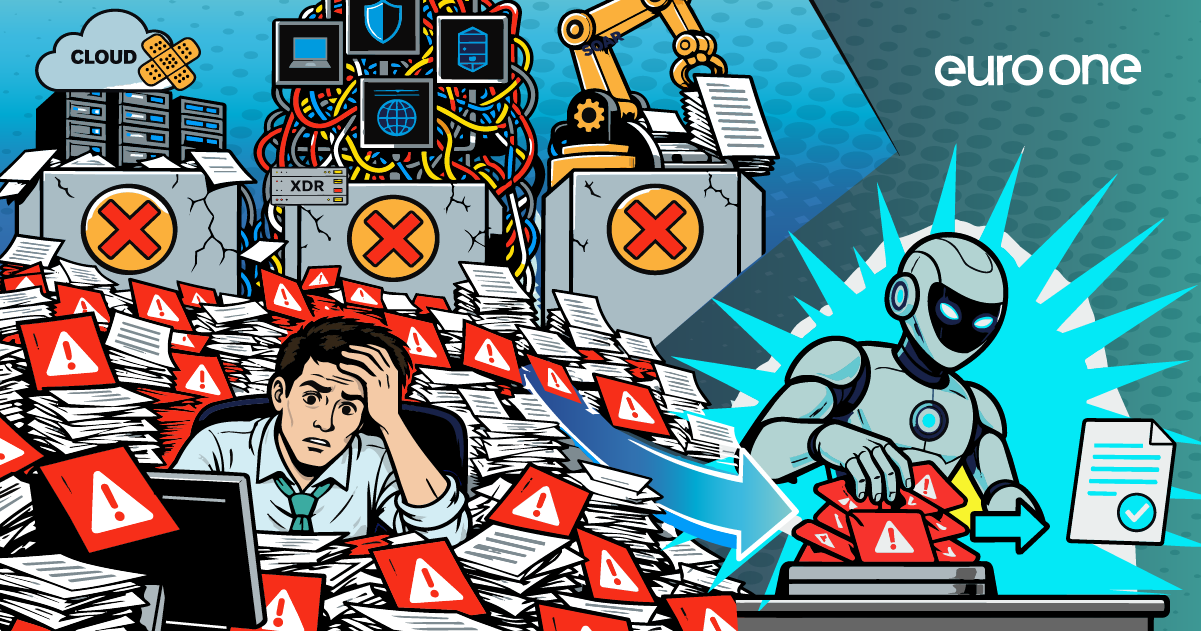
SOCs face a growing challenge: security tools generate more alerts and data than analysts can realistically investigate. Expanding infrastructures, sophisticated cyberattacks, and limited resources are putting traditional SOC models under pressure.<br/>AI-powered SOC platforms offer a different approach. Instead of simply collecting more information, they help security teams investigate incidents faster and make better-informed decisions.
Why traditional SOC operations are struggling
Most enterprises already rely on SIEM, endpoint protection, and automated detection technologies. However, having more security tools does not necessarily mean better protection.
SOC teams face several persistent challenges:
- Excessive alert volumes and increasingly complex threats
- Shortages of experienced cybersecurity professionals
- Analyst fatigue and high operational costs
- Growing infrastructure complexity
- Pressure to investigate incidents faster
Consequently, potentially dangerous activities may remain undetected because analysts cannot examine every event.
Why existing technologies haven’t solved the problem
Cloud security platforms improved data accessibility and centralized monitoring but introduced new operational dependencies.
XDR solutions promised unified security operations, yet vendor lock-in and integration limitations often reduced their effectiveness.
SOAR platforms successfully automated repetitive response processes. Nevertheless, complex investigations still require human expertise, while maintaining automation workflows creates additional work.
These limitations have encouraged organizations to explore AI-driven security operations.
AI agents bring a new approach to security operations
Unlike traditional automation, AI SOC agents can independently perform investigative tasks using predefined methodologies and connected security data.
Different agents can support specific SOC functions:
- Analyst Agent
- Threat Hunting Agent
- CTI Agent
- Incident Investigation Agent
- Response Coordination Agent
These specialized agents work alongside existing security technologies rather than replacing them.
How AI accelerates incident investigations
When a security alert appears, an AI analyst can automatically collect relevant information from SIEM, endpoint protection, identity management, and threat intelligence systems.
It then identifies correlations, reviews previous incidents, evaluates risks, and generates a structured investigation report.
Instead of manually gathering evidence, human analysts receive actionable findings that support faster decision-making.
The business value of AI-powered SOCs
AI agents enable continuous investigation without the limitations of traditional working hours. Their main advantages include:
- 24/7 incident analysis with minimal waiting time
- Faster alert validation and prioritization
- Reduced false-positive workload
- Lower operational pressure on analysts
- Automated investigation summaries
While traditional initial investigations may require 15–25 minutes, reviewing AI-prepared findings can take as little as 1–2 minutes, depending on incident complexity.
The future of SOC: human expertise supported by AI
AI agents are not intended to eliminate security analysts. Their purpose is to handle repetitive investigations while specialists retain responsibility for validation, oversight, and critical decisions.
By combining AI-driven analysis, human judgment, and automated response capabilities, organizations can improve SOC efficiency without sacrificing control.
AI-assisted security operations are already becoming a practical reality. Organizations that adopt these capabilities effectively can strengthen their defenses while making better use of their cybersecurity expertise.
Read the full article on our International subsidiary’s website by clicking on the logo: