




OT Cybersecurity in 2026: progress is real, but so is the pressure
 Gergely Lesku
 2026.09.24

OT security is no longer a specialist issue limited to industrial teams. As production environments connect to IT networks, cloud services and remote access, cyber risk increasingly affects continuity, compliance and safety. The 2026 State of Operational Technology and Cybersecurity Report shows progress—but attackers are evolving just as quickly.
OT security moves into the C-suite
Responsibility for OT cybersecurity is becoming more centralized. Sixty percent of organizations now place it under the CISO or CIO, while 81% of those that have not yet done so plan to centralize responsibility within a year.
This reflects a broader shift: protecting operational environments now requires cooperation between IT, OT and executive management.
More visibility, more realistic maturity
Fewer organizations rate themselves at the highest maturity levels than before. Rather than signalling regression, this may reflect better awareness of previously hidden weaknesses.
Key priorities include:
- Asset discovery and visibility
- Network segmentation
- Stronger access control
- Standardized security processes
- Improved monitoring and detection
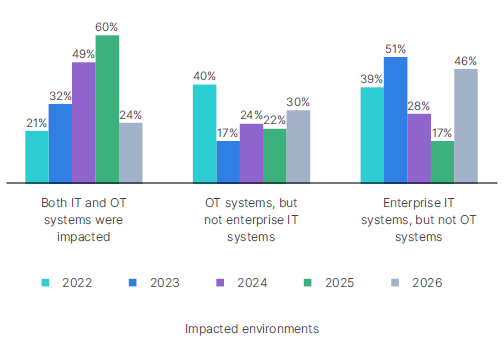
Better detection is also increasing incident reporting. In 2026, 71% of respondents reported one to nine intrusions or attempts, up from 47% a year earlier. Meanwhile, incidents affecting both IT and OT fell from 60% to 24%, suggesting stronger segmentation.
Traditional attack methods still dominate
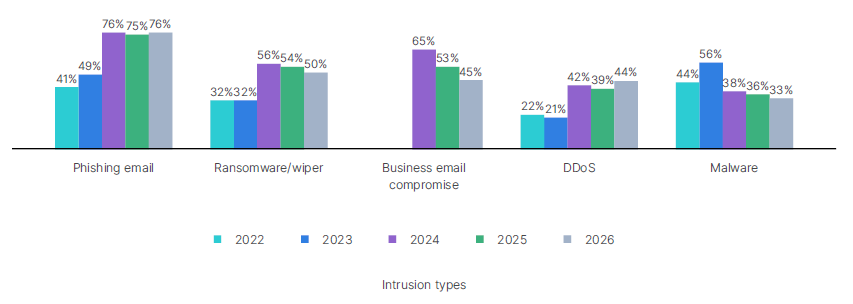
Phishing remains the most common intrusion type, affecting 76% of surveyed organizations, while ransomware affects 50%. DDoS, compromised web applications and business email compromise also remain significant.
Because many OT incidents still begin through conventional IT attack paths, industrial security cannot be managed in isolation. Awareness training, identity security, email protection and Zero Trust principles remain important.
Visibility and dwell time remain concerns
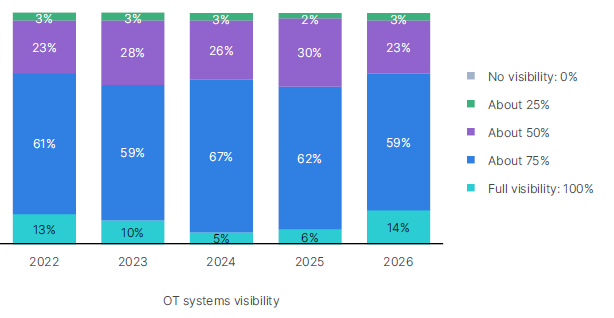
Full OT asset visibility improved from 5% in 2025 to 14% in 2026, but many organizations still see only part of their environments. This makes it harder to detect vulnerable devices, understand communications and respond quickly.
The report also highlights more attacks remaining undetected for weeks or months. Longer dwell times give attackers more opportunity to perform reconnaissance, establish persistence and prepare disruptive actions.
What should organizations prioritize?
With 89% of respondents expecting more cybersecurity regulation within five years, priorities include:
- OT asset visibility
- IT/OT segmentation
- Secure remote access
- OT-integrated incident response
- OT-focused threat intelligence
- Platform-based security architectures
The direction is positive, but risk is not slowing down. Organizations that combine visibility, governance and integrated controls will be better prepared to protect production and maintain business continuity.
Read the full article on our International subsidiary’s website by clicking on the logo: