



Megalodon attack exposes risks in software development chains
 Gergely Lesku
 2026.05.28

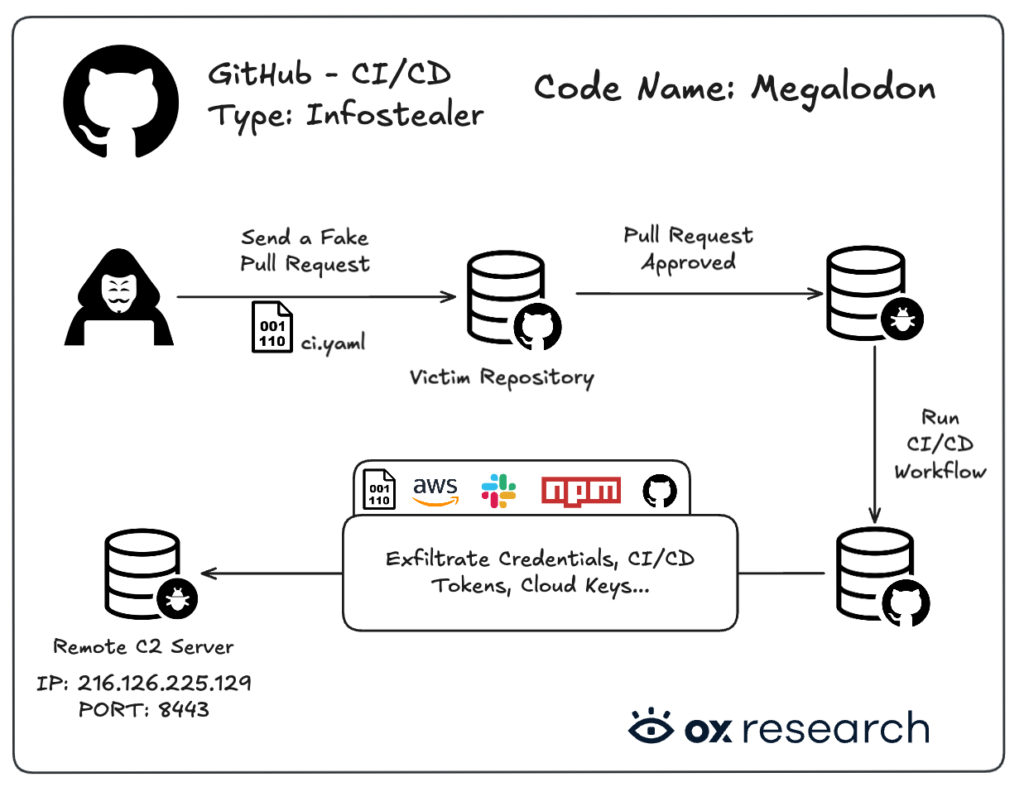
A large-scale cyber campaign known as “Megalodon” has highlighted how exposed modern software development can be. According to reports, attackers may have affected more than 5,500 GitHub repositories in just a few hours by inserting changes that looked like ordinary maintenance, but were actually designed to collect sensitive data.
The aim was not to break software visibly or alert users immediately. Instead, the attackers targeted a part of the development process that many teams treat as routine and therefore may not inspect closely enough.
The attackers targeted the release process, not the visible software
When people think of a cyberattack, they often imagine hacked websites, stolen passwords, or systems suddenly going offline. Megalodon was more subtle. Rather than changing the visible functions of software, it focused on the background processes used to build, test, and release it.
This is especially dangerous because these automated systems often have access to confidential information, including access keys, cloud permissions, release credentials, and developer tokens. If attackers reach this layer, they may compromise not only one project, but an entire development chain.
A harmless-looking update may have opened the door to data theft
The attackers relied on the fact that their modifications appeared to be ordinary system updates. A busy developer or administrator could easily miss them, especially if the core functions of the software continued to work normally.
In the background, however, the malicious code could search for valuable information such as corporate access keys, cloud credentials, developer tokens, hidden configuration files, or environmental variables used during the release process.
One of the most serious risks is that the malicious code may not cause any immediate error. Some versions could remain inactive and only run later, which makes detection much harder. A project that appears to work correctly is not necessarily clean behind the scenes.
Official releases can also carry hidden risks
One reported example was Tiledesk, an open-source customer service and chatbot platform. In this case, the suspicious modification may have entered the source code on GitHub and later been included in released versions by the maintainer.
This matters because users and developers often trust software that comes from an official source, under a familiar project name and from a known publisher. The weakness, however, may have appeared earlier in the development process, before the final package was released.
The risk extends beyond GitHub
Megalodon fits into a broader trend: attackers are increasingly focusing on developer tools and software supply chains. By compromising a popular project or a development environment, they can reach far more systems than by targeting individual users one by one.
Open-source projects are especially attractive targets because many companies rely on them. One malicious change can spread into other applications, packages, and corporate systems. This is why such incidents are known as supply chain attacks: they target a link in the chain before the software reaches the end user.
What should organizations review now?
Organizations should review whether suspicious changes appeared in their projects around May 18, 2026. Particular attention should be paid to files related to automated testing, building, and deployment.
If a project may have been affected, the suspicious changes should be removed, and access keys, passwords, and tokens should be replaced. Logs should also be checked for unusual executions, unexpected data transfers, or unknown cloud logins.
Experts warn that blocking a known malicious server is not enough. If sensitive data has already been exposed, old credentials remain dangerous and must be revoked.
The challenge is wider than a single project. Modern software often contains third-party code, libraries, and components, which means a compromise can spread through several layers. Finding hidden backdoors and applying reliable fixes may therefore take significant time, especially in community-maintained projects with limited resources.
Why development security needs a broader approach
The main lesson of Megalodon is that software security cannot stop at reviewing application code. Companies must also examine how software is developed, who can access release processes, which automated workflows run in the background, and what sensitive information those workflows can reach.
The attack was effective because it hid inside ordinary-looking development activity. The immediate task is to understand the scope of the problem, review existing protections, and update security strategies for a software ecosystem that is increasingly interconnected.
Read the full article on our International subsidiary’s website by clicking on the logo: