




SCA in action: integrating vulnerability management into the build process
 Expert of the InfoSec division
 2026.07.10
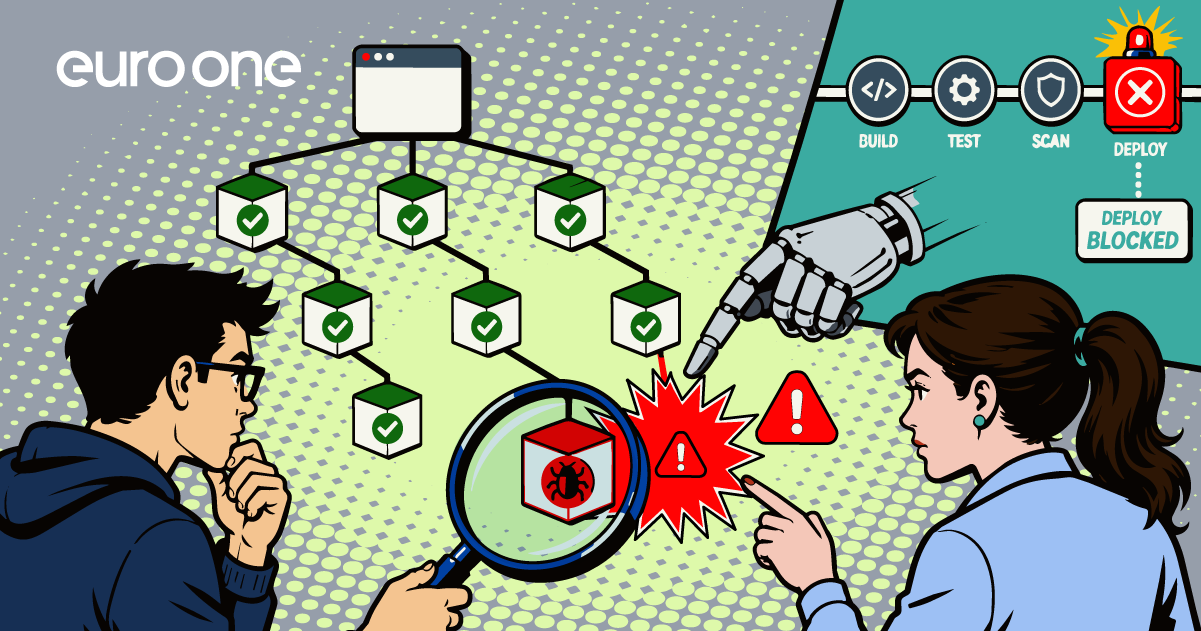
In our previous article, we explained why it is important to know which open-source and third-party components an application is built from. Software Composition Analysis (SCA), however, brings real value only when it becomes part of everyday development and security workflows.
The key question is not only whether a vulnerable component exists. Teams also need to know when it appeared,
- which build or branch introduced it,
- whether it is used at runtime,
- whether it can actually be exploited,
- and what should be done about it: fix, triage, exception handling, or release blocking.
A well-structured SCA process helps answer these questions with evidence.
Why integrate SCA into the pipeline?
Fast feedback is critical. If a vulnerable dependency is found days or weeks later, it is harder to connect the issue to a developer change. When SCA runs in CI/CD, the team sees what risk a new build introduced.
Pipeline-based SCA can:
- check packages in the build,
- detect direct and transitive vulnerabilities,
- link findings to the build and branch,
- stop the process based on policy,
- and require documented triage.
A practical rollout starts with visibility, then tightens policies based on application criticality and team maturity.
The build gate is a checkpoint
A policy-based build gate prevents serious risks from moving forward unnoticed. If a pipeline fails because of a vulnerability, it means a decision is needed.
The team may:
- update the vulnerable package,
- modify the dependency chain,
- document a false positive,
- approve a temporary exception,
- or block the release if the risk is too high.
Policies should reflect business context. A customer-facing critical application may need strict rules, while a less critical internal component may only need a warning.
Not every critical finding is exploitable
SCA tools may show that a vulnerable component is present, but that does not prove the application is exploitable. A package may be installed while the vulnerable function is not used. The finding is valid, but may not create a real attack surface.
Developers and security teams must triage findings together. A false positive or exception must be documented with evidence:
- affected component,
- dependency path,
- vulnerable function,
- code path usage,
- reviewer and approver,
- exception validity.
This supports audits, where the key question is what decision was made, why, and whether it can be traced.
Transitive dependencies can hide risk
Many serious vulnerabilities appear through transitive dependencies, not packages selected directly by developers. SCA helps uncover these hidden risks and shows:
- which direct package introduced it,
- which version is affected,
- whether a fixed version is available,
- and what update path is recommended.
Often the safest fix is to update the direct dependency to a version that includes the corrected transitive component.
Fix immediately or triage first?
Immediate patching is usually right when a compatible fix is available, the component runs at runtime, the issue is connected to an external attack surface, the vulnerability is critical or high severity, or a known exploit exists.
More detailed triage is needed when there is no simple fix, the update may cause breaking changes, exploitability is unclear, or business context is needed.
Advisory response: are we affected?
SCA remains valuable after the build. A component that is safe today may become critical tomorrow if a new advisory, vendor notice or threat intelligence alert appears.
Organizations must quickly identify:
- affected applications,
- versions in use,
- business criticality,
- external accessibility,
- and whether active exploitation is known.
Key takeaway
SCA does more than find vulnerable components. Its real value is that it turns findings into prioritized, manageable and business-relevant tasks.
When integrated into CI/CD, SCA shows where a risk enters the build and when the process must stop. Evidence-based triage shows what must be fixed, what needs deeper analysis, and what can be accepted as a documented exception.
SCA becomes a control layer between development, security and business risk management.
Read the full article on our International subsidiary’s website by clicking on the logo: